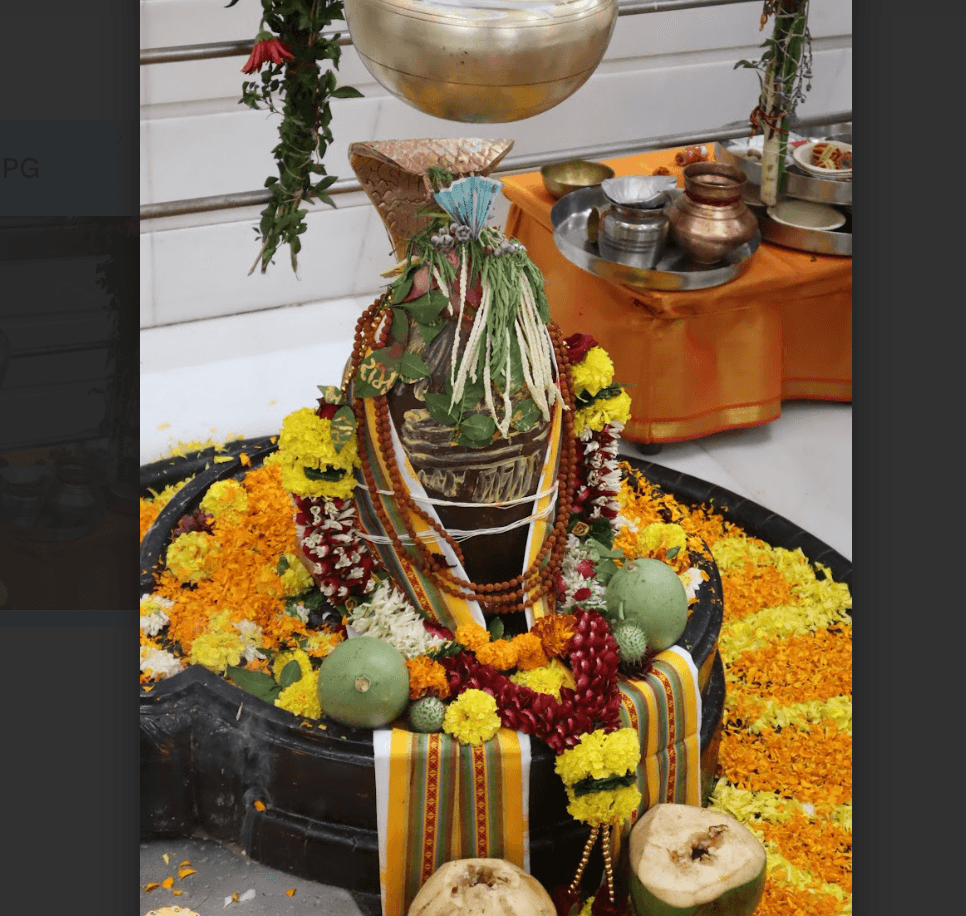
Rudrabhishek: Meaning, Types of Abhishek, Benefits & How the Puja Is Performed
Hindu Rituals · Updated 6 October 2026 · 3 min read
Rudrabhishek is the bathing (abhishek) of the Shivalinga with sacred substances while Vedic hymns to Rudra — Lord Shiva — are chanted. It is one of the most powerful and popular forms of Shiva worship, performed for health, peace of mind, removal of obstacles and the blessings of Mahadev. It can be done at home, in a temple, or by pandits on your behalf.
The hymns: Sri Rudram and Rudrashtadhyayi
Two Vedic texts are used, depending on regional tradition:
- Sri Rudram (Namakam and Chamakam) from the Krishna Yajurveda (Taittiriya Samhita, sections 4.5 and 4.7) is used across South India and by many traditions elsewhere. The Namakam salutes Rudra again and again with namo; the Chamakam asks for blessings with cha me.
- Rudrashtadhyayi, eight chapters drawn from the Shukla Yajurveda, is the text most North Indian pandits chant for "Rudri path".
Both end with the most famous Shiva mantra of all, the Mahamrityunjaya mantra (Rig Veda 7.59.12): Om tryambakam yajamahe sugandhim pushtivardhanam…
Types of Rudrabhishek by scale
| Name | Recitations of the Rudram | Typical form |
|---|---|---|
| Rudrabhishek | 1 | Home or temple puja, 1.5–2 hours |
| Ekadasha Rudra (Ekadashini) | 11 | One or more pandits, 3–4 hours |
| Laghu Rudra | 121 (11 × 11) | Usually 11 pandits in one day |
| Maha Rudra | 1,331 (11 × 11 × 11) | A multi-day yajna |
| Ati Rudra | 14,641 (11⁴) | A large public yajna, rarely performed |
What is offered in the abhishek
The Shivalinga is bathed with a sequence of substances, each followed by clean water. Families and pandits associate each with a particular blessing:
- Water (jal), ideally with Ganga jal — purification and peace.
- Milk — health and long life.
- Curd, ghee and honey — together with milk and sugar these make panchamrit, offered for overall well-being and sweetness in life.
- Sugarcane juice — traditionally associated with prosperity.
- Coconut water and bhasma in some traditions.
After the abhishek, Shiva is adorned with chandan, bilva (bel) leaves, dhatura, aak flowers, white flowers and akshat.
Traditionally not offered to Shiva: tulsi leaves, the ketaki flower, haldi and kumkum on the Shivalinga, and water poured from a conch (shankh).
Step-by-step Rudrabhishek vidhi
- Setup. Place the Shivalinga in a jalahari or a tray so that the water can drain. Keep the substances in separate bowls.
- Sankalp. State your name, gotra, place and the purpose of the abhishek.
- Ganesh, Kalash and Navagraha puja. These are performed first, as in most Vedic rituals.
- Abhishek with chanting. As the pandits chant the Rudram or Rudrashtadhyayi, the Shivalinga is bathed with water, milk, curd, ghee, honey, sugar, sugarcane juice and finally clean water.
- Shringar. The Shivalinga is wiped, adorned with chandan and bhasma, and offered bilva leaves (the three-leaf stalk, unbroken), dhatura and flowers.
- Naivedya and aarti. Fruits and sweets are offered and "Om Jai Shiv Omkara" is sung.
- Pradakshina. Circumambulate only halfway around the Shivalinga — the outlet of the jalahari (the somasutra) is not crossed.
- Prasad. The abhishek water (charanamrit) and prasad are shared with the family.
Best days for Rudrabhishek
- Mondays (Somvar) — the day of Shiva.
- Pradosh — the Trayodashi evening of each fortnight.
- Masik Shivratri — Krishna Chaturdashi every month.
- Shravan month — the most auspicious month for Shiva worship.
- Mahashivratri — in 2027 on Saturday, 6 March. See our Mahashivratri 2027 guide.
For a Rudrabhishek done for a particular wish (a kamya puja), many pandits check the Shiv Vaas — where Shiva is said to reside on a given tithi — and prefer tithis when Shiva is with Gauri, in Kailash or on Nandi.
Rudrabhishek abroad
- Parthiv Shivalinga. If you do not have a Shivalinga at home, a Parthiv Shivalinga made from clean clay or soil is a long-standing tradition. It is respectfully immersed in water after the puja.
- Drainage. Use a deep tray or jalahari and collect the abhishek water; it can be poured into plants afterwards.
- Join from home. Many families abroad have Rudrabhishek performed by pandits in India while they watch and take the sankalp over video. Book a Rudrabhishek with our pandits.
Rudrabhishek is also often recommended alongside Navagraha Shanti Puja when a family is going through a difficult planetary period.
Frequently asked questions
What is the difference between Jalabhishek and Rudrabhishek?
Jalabhishek is simply pouring water on the Shivalinga, which any devotee can do daily. Rudrabhishek is a fuller Vedic ritual in which the Shivalinga is bathed with several sacred substances while the Sri Rudram or Rudrashtadhyayi is chanted, usually with sankalp, Ganesh and Navagraha puja.
Can Rudrabhishek be done at home?
Yes. It can be done at home on a Shivalinga placed in a jalahari or tray. Families without a Shivalinga traditionally make a Parthiv (clay) Shivalinga for the puja.
Which day is best for Rudrabhishek?
Mondays, Pradosh (Trayodashi), Masik Shivratri, the month of Shravan and Mahashivratri are the most popular. For a puja with a specific wish, many pandits also check the Shiv Vaas for the chosen tithi.
How long does Rudrabhishek take?
A Rudrabhishek with one recitation of the Rudram and the main abhishek takes about 1.5 to 2 hours. An Ekadasha Rudra (11 recitations) takes 3 to 4 hours, and Laghu Rudra is usually done by several pandits together.
Can women perform or sponsor Rudrabhishek?
Yes. Women commonly perform abhishek and sponsor Rudrabhishek for their family; the Vedic chanting is usually done by the pandits.
More guides
Puja
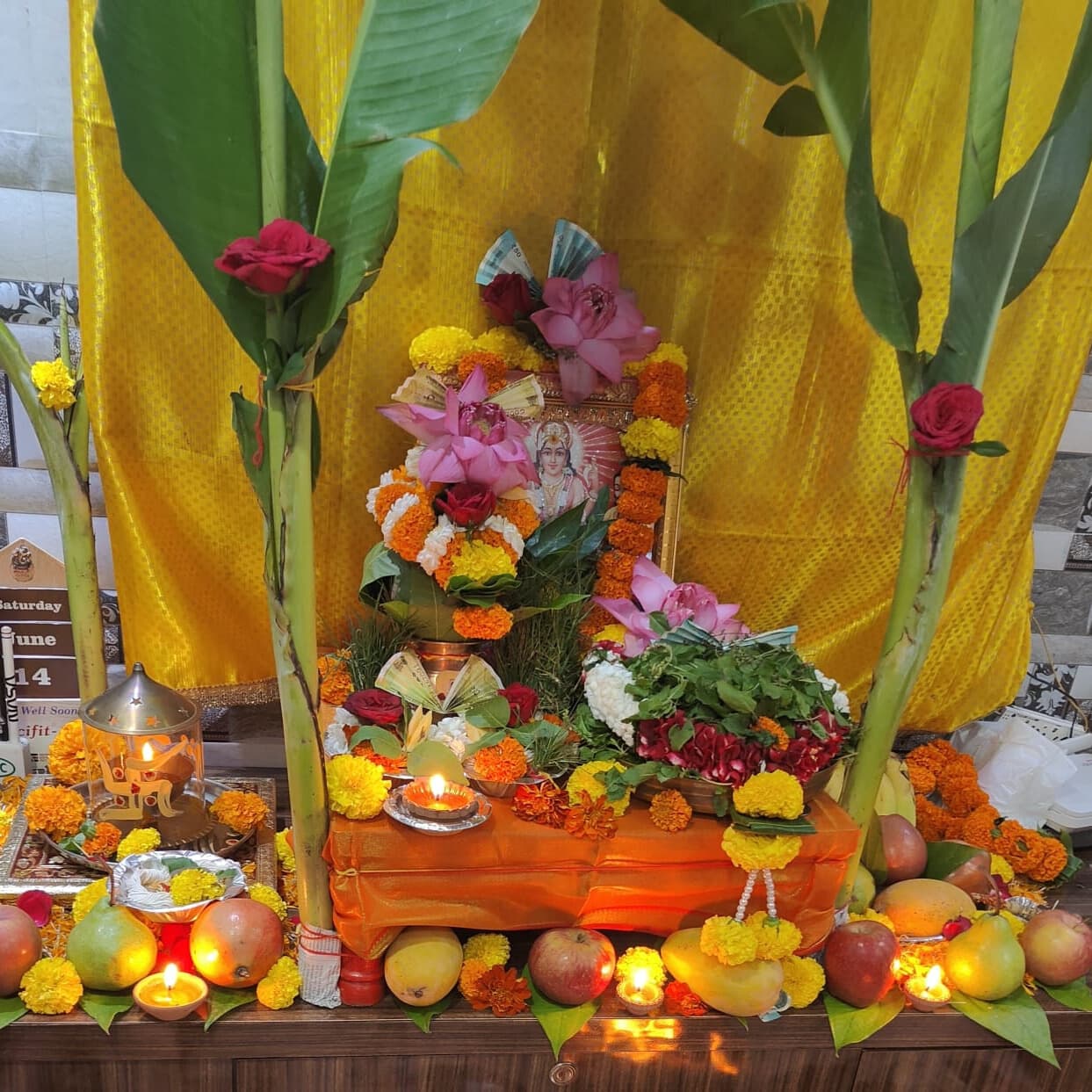
Satyanarayan Puja: Complete Vidhi, Samagri List, Katha Summary & Best Dates (2026)
Satyanarayan Puja step by step: the complete samagri list, the five chapters of the katha, Purnima dates for 2026 and tips for doing the puja abroad.
4 min read
Puja
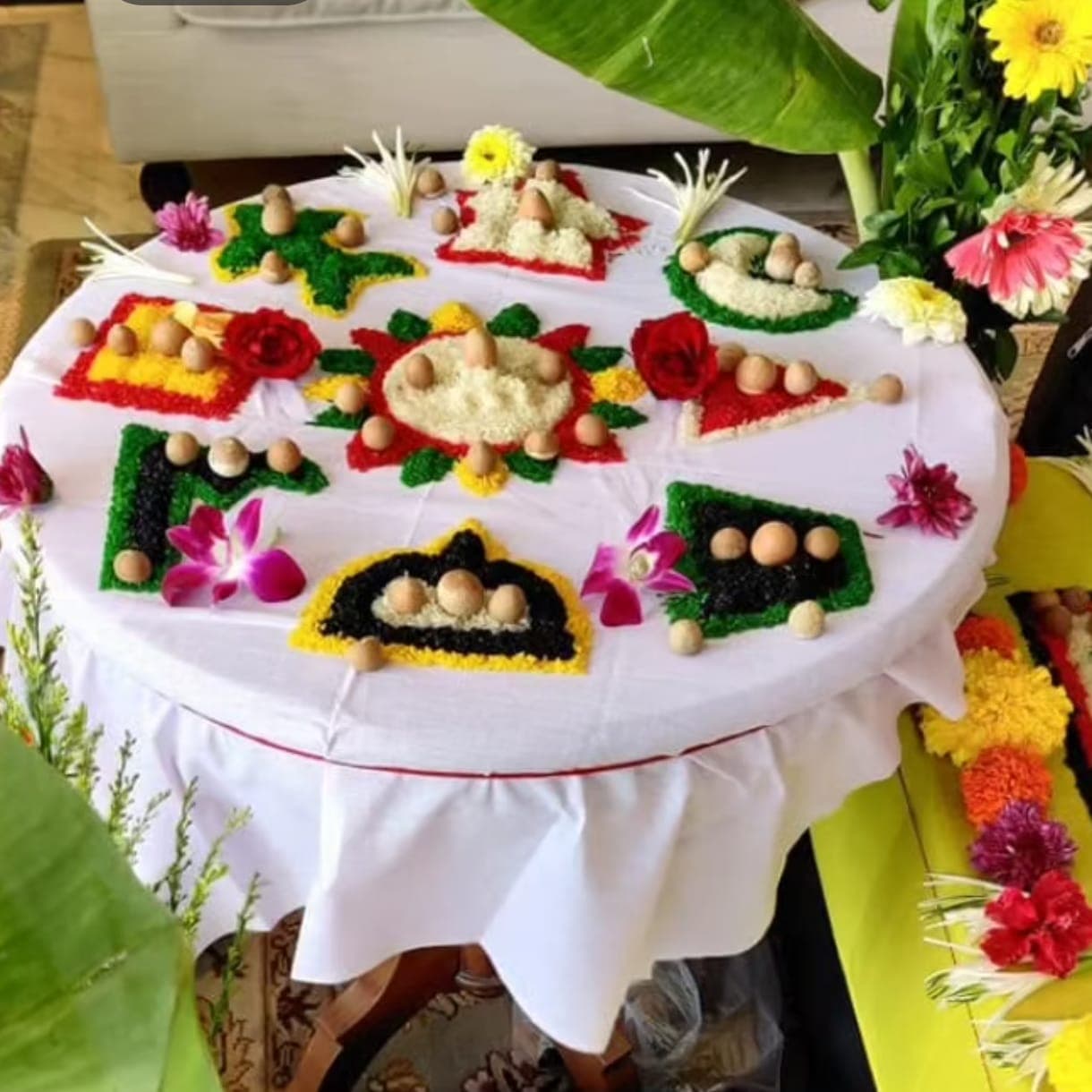
Navagraha Shanti Puja: The Nine Planets, When It Is Recommended & How It Is Performed
Navagraha Shanti Puja explained: the nine grahas, their beej mantras and samidha, when it is recommended (Sade Sati, Dhaiya) and how it is done.
4 min read
Festival
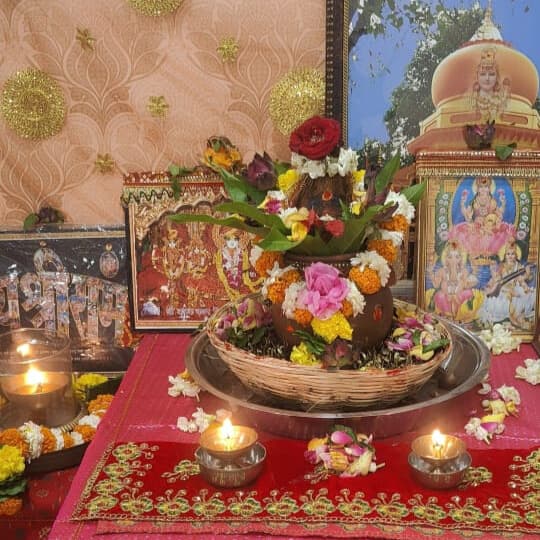
Navratri 2026: Dates, Ghatasthapana Muhurat, Nine Forms of Durga & Kanya Pujan Guide
Sharad Navratri 2026 runs 11–19 October. Ghatasthapana muhurat, the nine forms of Durga, Kanya Pujan on 19 October and how to observe Navratri abroad.
6 min read