Navagraha Shanti Puja: The Nine Planets, When It Is Recommended & How It Is Performed
Hindu Rituals · Updated 6 October 2026 · 4 min read
Navagraha Shanti Puja is a Vedic ritual to pacify the nine planetary deities (grahas) and seek their blessings. In Jyotish (Vedic astrology), the positions of the nine grahas in a person's birth chart are believed to influence health, relationships, career and peace of mind. When a chart shows afflictions — or when a difficult transit or dasha period begins — families perform Navagraha Shanti to reduce the challenges and strengthen the favourable planets.
The nine grahas
The Navagrahas are the Sun, the Moon, five visible planets, and Rahu and Ketu — the two lunar nodes, called chhaya grahas (shadow planets) because they have no physical body.
| Graha | Day | Beej mantra | Havan samidha (wood) |
|---|---|---|---|
| Surya (Sun) | Sunday | Om Hraam Hreem Hraum Sah Suryaya Namah | Arka (madar) |
| Chandra (Moon) | Monday | Om Shraam Shreem Shraum Sah Chandraya Namah | Palash |
| Mangal (Mars) | Tuesday | Om Kraam Kreem Kraum Sah Bhaumaya Namah | Khadira (khair) |
| Budh (Mercury) | Wednesday | Om Braam Breem Braum Sah Budhaya Namah | Apamarga |
| Guru (Jupiter) | Thursday | Om Graam Greem Graum Sah Gurave Namah | Ashvattha (peepal) |
| Shukra (Venus) | Friday | Om Draam Dreem Draum Sah Shukraya Namah | Udumbara (gular) |
| Shani (Saturn) | Saturday | Om Praam Preem Praum Sah Shanaischaraya Namah | Shami |
| Rahu | — | Om Bhraam Bhreem Bhraum Sah Rahave Namah | Durva |
| Ketu | — | Om Sraam Sreem Sraum Sah Ketave Namah | Kusha |
The nine samidhas — one sacred wood for each graha — are listed in the Yajnavalkya Smriti, one of the oldest sources for the Navagraha ritual.
When Navagraha Shanti is recommended
- Shani Sade Sati — the roughly seven-and-a-half-year period when Saturn transits the signs before, on and after your Moon sign.
- Shani Dhaiya (Ardhashtama / Ashtama) — the two-and-a-half-year periods when Saturn transits the fourth or eighth sign from your Moon.
- Mahadasha or antardasha of a malefic planet, such as a difficult Rahu, Ketu or Shani period.
- Planetary afflictions in the birth chart, as identified by an astrologer.
- Before major beginnings — a wedding, griha pravesh, a new business or a long journey. Navagraha worship is already part of most Vedic samskaras for this reason.
- Persistent obstacles in health, career or family life, alongside practical steps and professional advice.
Navagraha Shanti is a spiritual practice. It complements — never replaces — medical, legal or financial advice.
How Navagraha Shanti Puja is performed
- Muhurat and sankalp. The pandit fixes a muhurat from your birth details, and the sankalp is taken in your name, gotra and nakshatra.
- Ganesh puja and Kalash sthapana, to begin without obstacles.
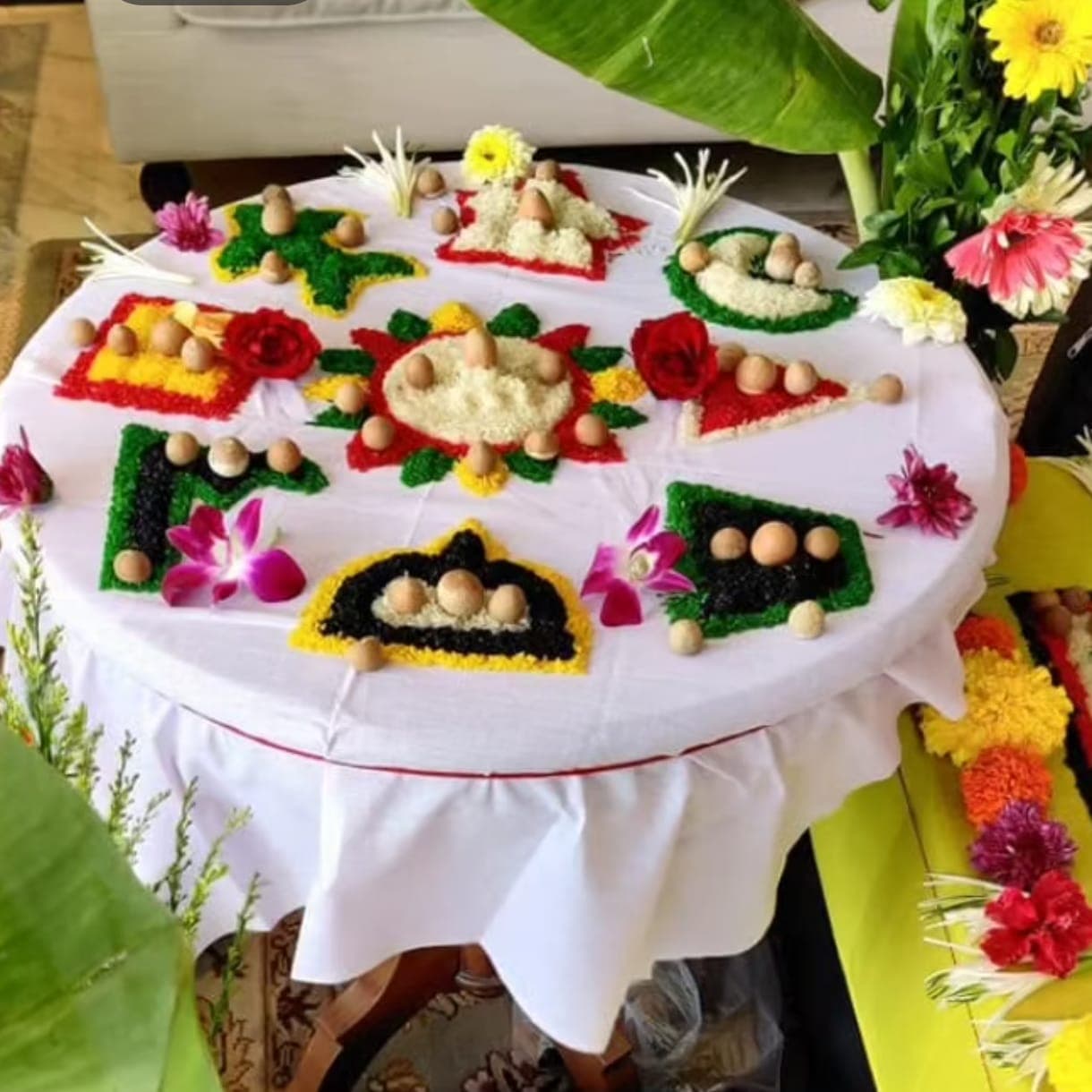
- Navagraha mandala. The nine grahas are invoked on a mandala, usually drawn with coloured grains on cloth. Surya is placed at the centre, with the other eight grahas around him in their traditional directions.
- Vedic mantras. Each graha is invoked with its Vedic mantra — for Surya, Aa krishnena rajasa… — and worshipped with its colour of flowers and cloth.
- Japa. The beej mantra or Vedic mantra of the main afflicting planet (often of all nine) is chanted a set number of times, which can take one or several days.
- Havan. Offerings of ghee, samagri and each graha's samidha are made into the sacred fire, with mantras for each planet.
- Navagraha Stotra. Many pandits recite the Navagraha Stotra attributed to Vyasa, beginning Japakusuma sankasham… for Surya.
- Purnahuti, aarti and daan. The ritual closes with the final offering and aarti. Grains, cloth or other items associated with the grahas are donated.
Navagraha Puja vs. Navagraha Shanti
A Navagraha Puja of two to three hours includes the mandala, mantras and a short havan, and suits beginnings and general well-being. An extended Navagraha Shanti adds longer japa, a full havan for each planet and, if advised, gemstone energisation. It is recommended for serious afflictions, Sade Sati or Dhaiya. See our Navagraha Pooja and Navagraha & Shanti Pooja pages for what each includes.
Navagraha Shanti for families abroad
- Birth details. Have your date, time and place of birth ready — the pandit needs them for the muhurat and sankalp.
- Japa needs time. The full japa for nine planets runs into tens of thousands of recitations, which is why it is usually performed by a team of pandits. Many families abroad have it performed in India in their name and join the sankalp and purnahuti by video.
- Havan indoors. A full Navagraha havan produces a lot of smoke; abroad it is better done in a temple hall, a garden or by pandits in India.
Many families pair Navagraha Shanti with a Rudrabhishek, as Lord Shiva is worshipped as the master of all the grahas.
Frequently asked questions
When should Navagraha Shanti Puja be done?
It is commonly performed during difficult planetary periods such as Shani's Sade Sati or Dhaiya, during the dasha of a malefic planet, when a horoscope shows planetary afflictions, and before major beginnings such as a wedding, griha pravesh or new business.
Can Navagraha puja be done at home?
Yes. A simple Navagraha puja with mantras can be done at home. A full Navagraha Shanti with mantra japa and havan for each planet is usually performed by pandits, at home or on your behalf.
Which day is best for Navagraha puja?
Pandits usually choose an auspicious muhurat based on your birth chart. Saturdays are popular when the puja is mainly for Shani, and the day associated with the troubling planet is often preferred.
Is Navagraha Shanti Puja the same as Navagraha havan?
The havan is one part of the full Navagraha Shanti. The complete ritual includes sankalp, Ganesh and Kalash puja, the Navagraha mandala, mantra japa for each planet, the havan with each planet's samidha, and daan.
Do I need to wear a gemstone after the puja?
Not necessarily. Gemstones should be worn only on the advice of a qualified astrologer who has studied your chart. Our extended Navagraha Shanti Puja can include energisation of a gemstone you have already been advised to wear.
More guides
Puja
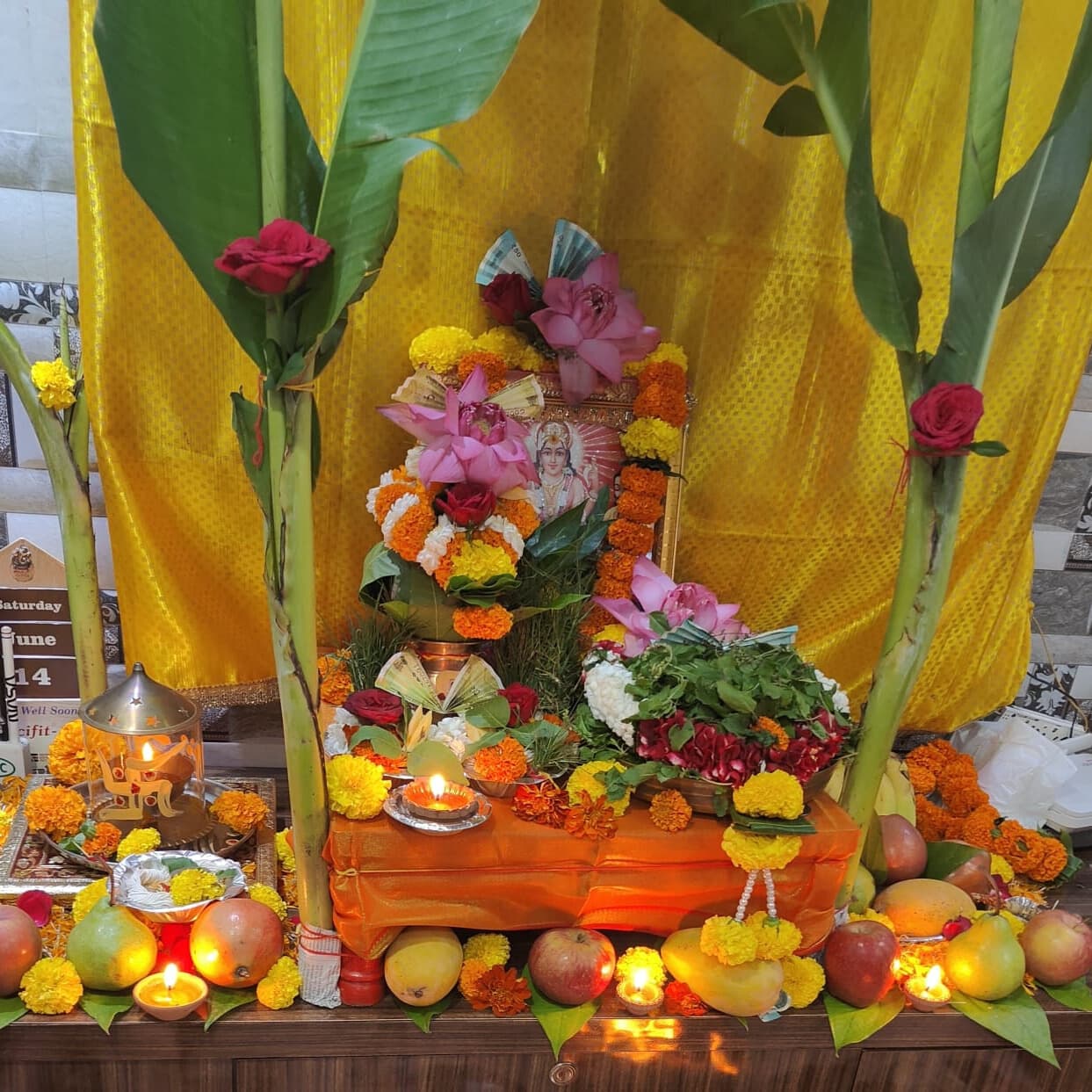
Satyanarayan Puja: Complete Vidhi, Samagri List, Katha Summary & Best Dates (2026)
Satyanarayan Puja step by step: the complete samagri list, the five chapters of the katha, Purnima dates for 2026 and tips for doing the puja abroad.
4 min read
Puja
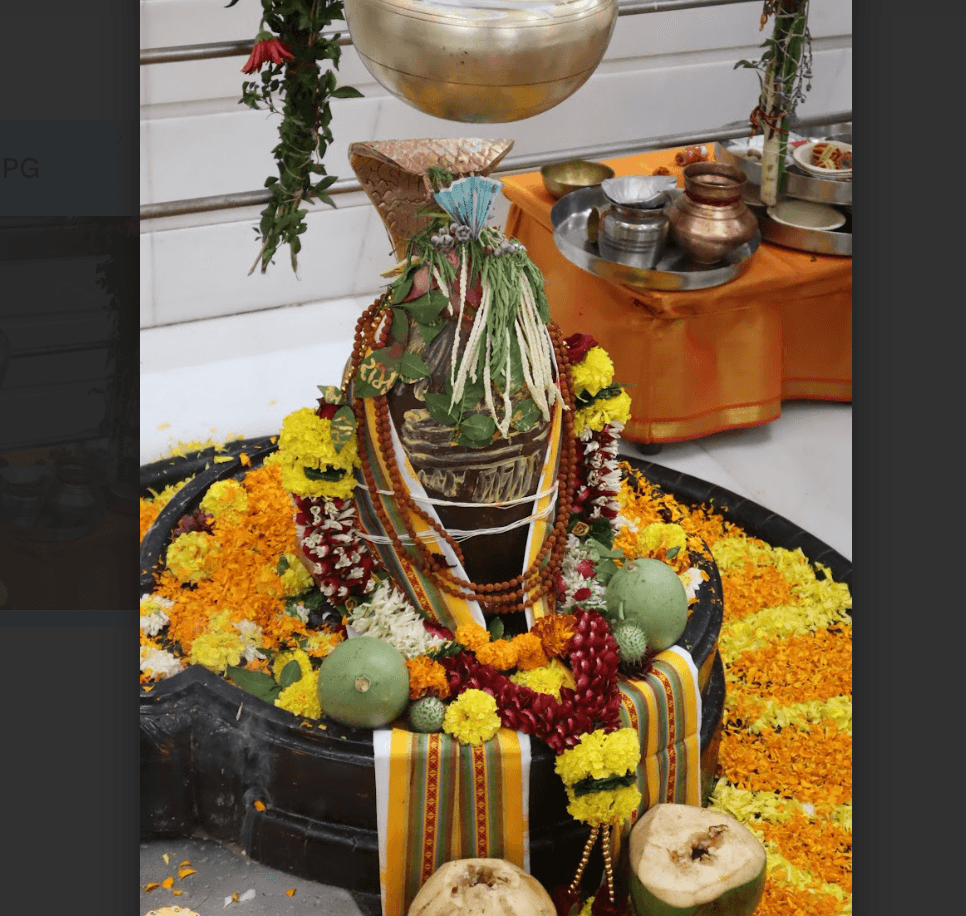
Rudrabhishek: Meaning, Types of Abhishek, Benefits & How the Puja Is Performed
What Rudrabhishek is, the Sri Rudram and Laghu Rudra, what is offered on the Shivalinga and why, the step-by-step vidhi and the best days to perform it.
3 min read
Festival
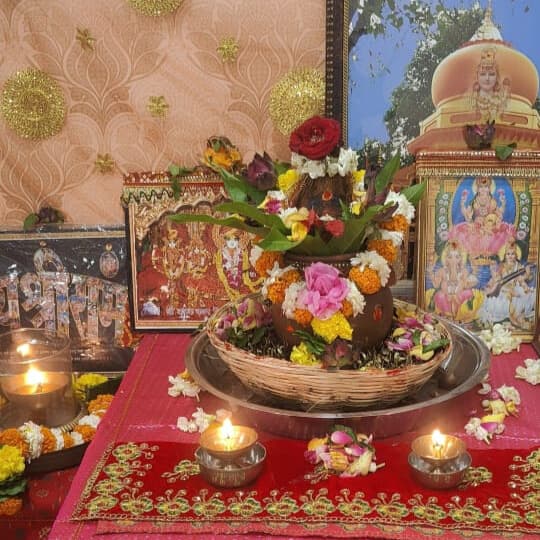
Navratri 2026: Dates, Ghatasthapana Muhurat, Nine Forms of Durga & Kanya Pujan Guide
Sharad Navratri 2026 runs 11–19 October. Ghatasthapana muhurat, the nine forms of Durga, Kanya Pujan on 19 October and how to observe Navratri abroad.
6 min read