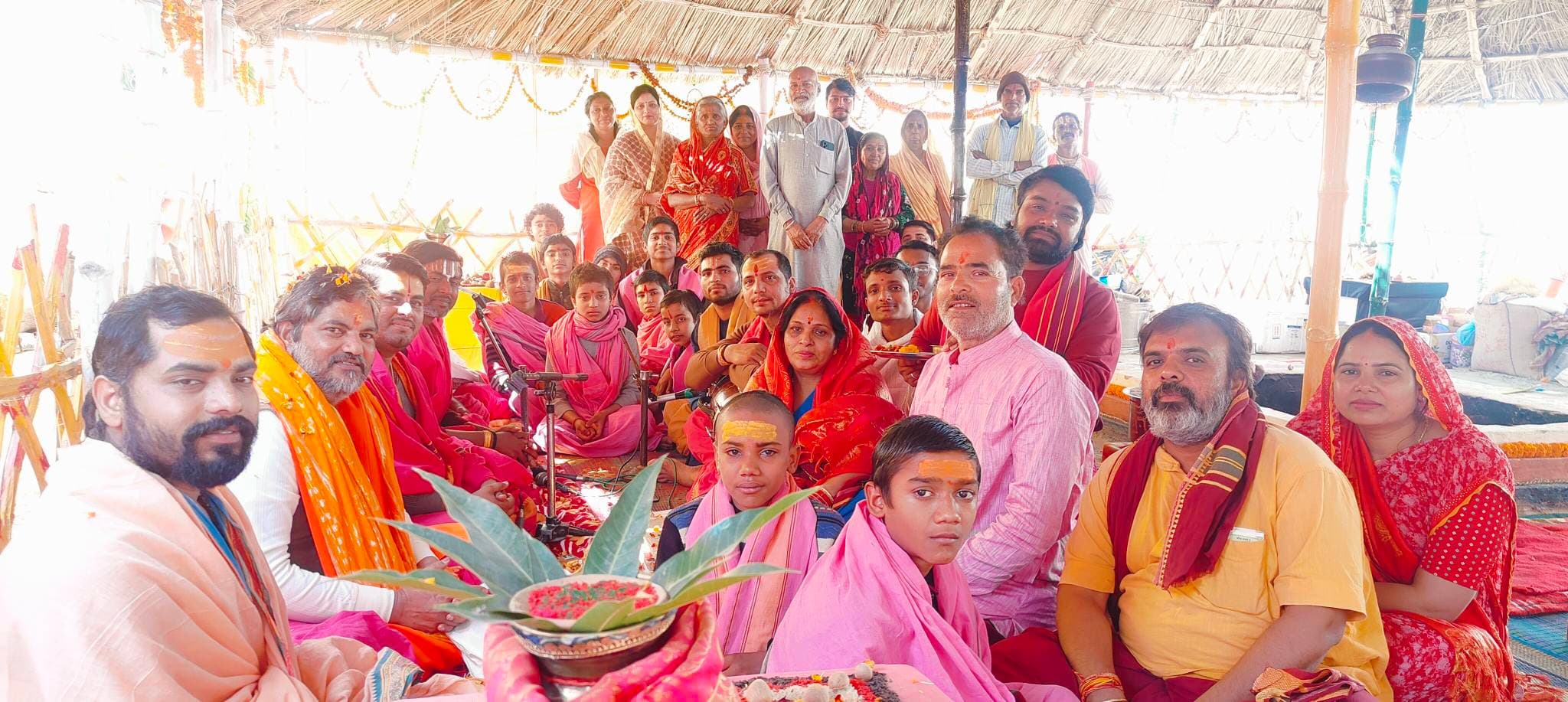
Maha Mrityunjaya Jaap: Mantra Meaning, Benefits, Rules & How Many Times to Chant
Hindu Rituals · Updated 22 October 2026 · 3 min read
The Maha Mrityunjaya mantra is a Vedic prayer to Lord Shiva as Tryambaka, the three-eyed one, asking for liberation from the fear of death and for health and long life. It appears in the Rig Veda (7.59.12) and also in the Yajurveda. Chanting it, or having pandits perform a Maha Mrityunjaya jaap, is one of the most common prayers families turn to during illness or danger.
The mantra and its meaning
ॐ त्र्यम्बकं यजामहे सुगन्धिं पुष्टिवर्धनम् । उर्वारुकमिव बन्धनान् मृत्योर्मुक्षीय माऽमृतात् ॥
Om tryambakam yajāmahe sugandhiṁ puṣṭi-vardhanam, urvārukam iva bandhanān mṛtyor mukṣīya mā'mṛtāt.
Meaning: "We worship the three-eyed Lord (Shiva), who is fragrant and who nourishes all beings. Just as a ripe cucumber is released from its vine, may He free us from death — but not from immortality."
The image of the ripe cucumber is the heart of the mantra: liberation should come naturally, at the right time, without fear or pain.
Traditional benefits
Within Hindu tradition, the Maha Mrityunjaya mantra is chanted for:
- Health and recovery — especially during serious illness or before surgery.
- Protection — from accidents, danger and untimely death.
- Long life — on birthdays, and for elderly parents.
- Freedom from fear and anxiety, and peace of mind.
- Planetary afflictions — it is often recommended alongside Navagraha Shanti during difficult dashas.
- Peace at the end of life — chanted for a dying person and in the days after death.
These are spiritual benefits held in tradition. The jaap should always accompany proper medical care.
How to chant it yourself
- Bathe and sit facing east or north, ideally in the morning.
- Light a diya before a picture of Shiva or a Shivalinga, and offer water or milk and a bilva leaf if you can.
- Take a short sankalp — the name of the person you are chanting for and the purpose.
- Chant 108 times on a rudraksha mala, slowly and clearly. If 108 is not possible, 11 or 21 recitations with full attention are better than many hurried ones.
- End with a prayer and offer the merit for the person's well-being.
The shorter Laghu Mrityunjaya mantra, Om Jūṁ Saḥ, is used by some traditions for quick daily chanting.
The Maha Mrityunjaya jaap anushthan
For serious situations, families sponsor a formal jaap by pandits:
| Scale | Recitations | Typical form |
|---|---|---|
| Short jaap | 11,000 | 1–2 days, several pandits |
| Medium | 51,000 | 3–5 days |
| Full anushthan (sawa lakh) | 1,25,000 | 5–11 days by a team of pandits, followed by a havan |
The anushthan begins with sankalp, Ganesh and Kalash puja and Rudrabhishek, continues with the daily jaap, and ends with a havan of one-tenth the number of recitations (dashamsha), followed by tarpan, marjan and Brahmin bhojan in the full tradition.
When families perform the jaap
- During hospitalisation or serious illness of a family member
- Before major surgery
- On birthdays of elderly parents
- In the month of Shravan, on Mondays and on Mahashivratri
- During difficult planetary periods
Maha Mrityunjaya jaap from abroad
When a loved one is unwell — whether in India or abroad — the jaap can be performed by pandits in India with the sankalp in that person's name. Families join the sankalp and purnahuti by video. Ask us for a quote, or read about online puja for NRIs and the related Rudrabhishek.
Frequently asked questions
How many times should the Maha Mrityunjaya mantra be chanted?
For daily practice, 108 times on a rudraksha mala is traditional; even 11 or 21 times with devotion is meaningful. A full anushthan (formal vow) is 1,25,000 (sawa lakh) recitations, usually done by several pandits over a few days, followed by a havan.
What are the benefits of Maha Mrityunjaya jaap?
Traditionally it is chanted for protection, recovery from illness, long life, freedom from fear and peace at the time of death. It is a spiritual practice and should accompany, never replace, medical care.
Can women chant the Maha Mrityunjaya mantra?
Yes. Women commonly chant the Maha Mrityunjaya mantra, especially for the health of family members.
Can Maha Mrityunjaya jaap be done on someone else's behalf?
Yes. A family member can sponsor the jaap, and the pandits take the sankalp in the name of the person for whom it is performed — common when someone is in hospital or lives far away.
More guides
Puja
Griha Pravesh Puja: Vidhi, Samagri List & Muhurat Dates (Nov–Dec 2026)
How Griha Pravesh puja is done step by step, the three types, samagri list, muhurat rules and commonly listed Griha Pravesh dates for November–December 2026.
3 min read
Puja
Vastu Shanti Puja: When It Is Needed, Vidhi, Samagri & Office Opening Pooja
What Vastu Shanti puja is, when to perform it (new home, renovation, office opening), how the Vastu Purusha puja and havan are done, and what you need.
2 min read
Puja
Satyanarayan Puja: Complete Vidhi, Samagri List, Katha Summary & Best Dates (2026)
Satyanarayan Puja step by step: the complete samagri list, the five chapters of the katha, Purnima dates for 2026 and tips for doing the puja abroad.
4 min read