Pitra Dosh Nivaran Puja: Meaning, Shraddha, Tarpan, Pind Daan & Pitru Paksha 2027
Hindu Rituals · Updated 22 October 2026 · 3 min read
Pitra dosh nivaran puja is a set of rituals that honour and satisfy one's ancestors (pitrus), so that their blessings — not their unfulfilled wishes — flow to the family. The core rituals are shraddha (offerings with devotion), tarpan (offering water with sesame) and pind daan (offering rice balls), often with Brahmin bhojan and charity. They are performed every year on the ancestor's death tithi, during Pitru Paksha, and as a remedy when pitra dosh is indicated.
What pitra dosh means
The term is used in two ways:
- Ritual sense: when the duties towards departed ancestors — shraddha and tarpan — have been neglected, or when an ancestor's last rites were incomplete.
- Astrological sense: certain combinations in the birth chart, most often involving the Sun with Rahu, Ketu or Saturn, or afflictions to the ninth house (the house of ancestors and fortune).
Families who feel blocked by repeated obstacles — in marriage, children, health or prosperity — are often advised to perform these rituals. Whatever the reason, honouring one's ancestors is considered a sacred duty (pitru rina) in itself.
Pitru Paksha 2027 dates
| Begins (Purnima Shraddha) | Wednesday, 15 September 2027 |
| Ends (Sarva Pitru Amavasya) | Wednesday, 29 September 2027 |
During these sixteen lunar days, shraddha is performed on the tithi matching each ancestor's death. Sarva Pitru Amavasya is the day for ancestors whose tithi is not known, and for all ancestors together. Shraddha can also be performed on every Amavasya.
The rituals for ancestors
Tarpan
Water mixed with black sesame (til), barley and kusha grass is offered from the palms while the names and gotras of the ancestors are recited, usually facing south. Tarpan can be done daily during Pitru Paksha.
Pind daan
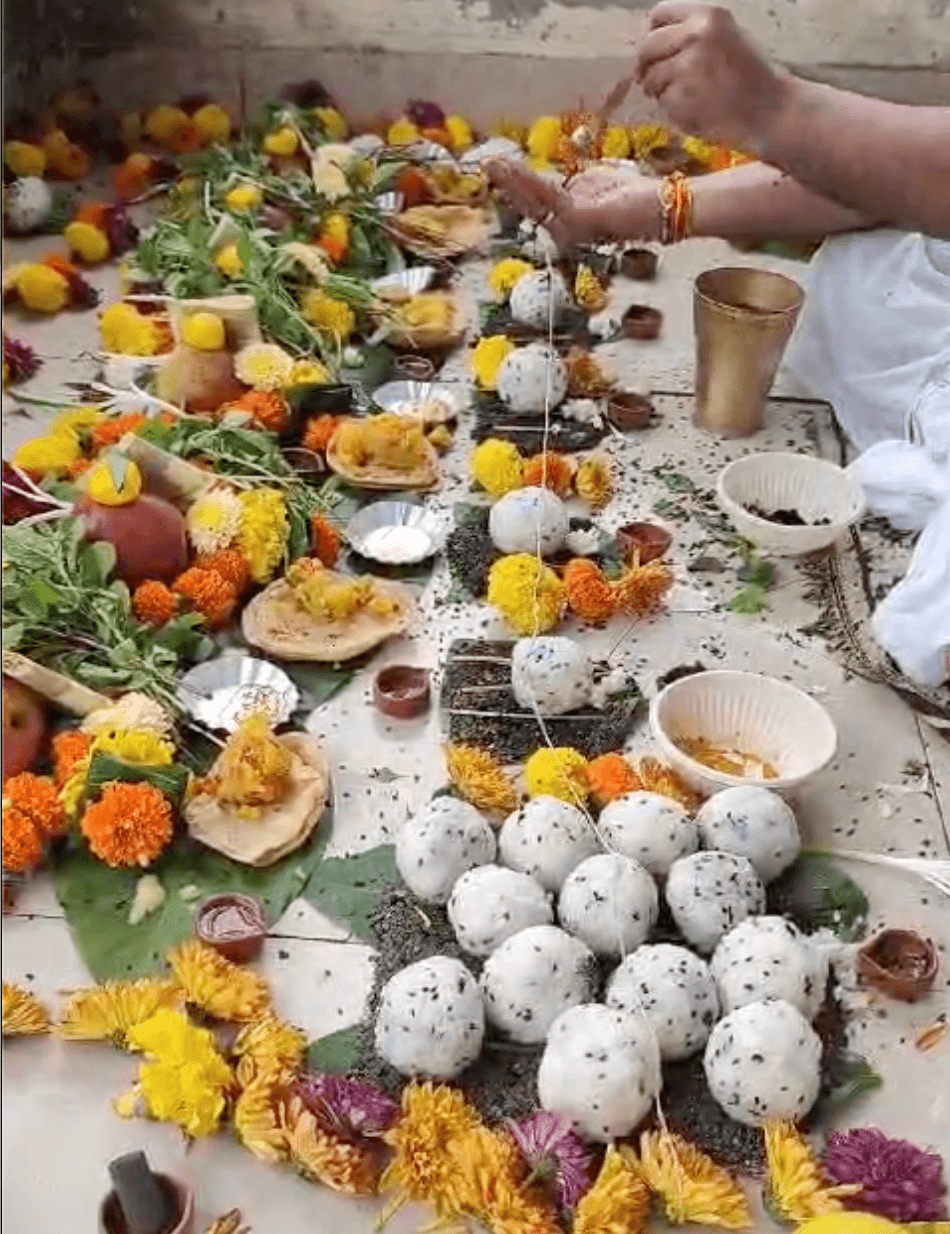
Pindas — balls of cooked rice mixed with sesame, ghee, honey and milk — are offered to the ancestors with mantras. Pind daan at Gaya is especially revered, and Varanasi, Prayagraj, Haridwar and other tirthas are also traditional places.
Shraddha and Brahmin bhojan
A sattvik meal is prepared and offered, and Brahmins are fed in the ancestors' honour. Portions are also set aside for a cow, a dog, crows and ants (panchabali). Charity (daan) of food, clothes and money completes the shraddha.
Narayan Bali and Tripindi Shraddha
For specific situations — for example an untimely or unnatural death in the family, or rites that were never performed — pandits may recommend Narayan Bali or Tripindi Shraddha. These are elaborate rituals traditionally performed at tirthas such as Trimbakeshwar and require an experienced pandit to advise on whether they are needed.
Simple ways to honour ancestors at home
- Light a lamp facing south on Amavasya evenings.
- Offer water with sesame to the Sun, remembering your ancestors.
- Feed cows, crows and the needy on Amavasya and during Pitru Paksha.
- Recite the Pitru Stotra or chant Om Pitrubhyah Namah.
- Avoid starting major new ventures during Pitru Paksha, as many families do.
Pitra dosh puja for families living abroad
Many NRI families cannot travel to India for shraddha. The rituals can be performed in India on your behalf, with your name as the karta (performer) in the sankalp and the names and gotra of your ancestors, ideally on the correct tithi. You can join the sankalp by video, and the pind daan and Brahmin bhojan are done in India. Ask us for a quote, or read about online puja for NRIs.
Pitra dosh is also often addressed alongside Navagraha Shanti when the Sun or Rahu is afflicted in the chart.
Frequently asked questions
What is pitra dosh?
In Hindu tradition, pitra dosh refers to the unfulfilled duties towards one's ancestors (pitrus) — for example when shraddha has not been performed — and, in astrology, to certain planetary combinations, often involving the Sun with Rahu or Saturn. The remedy in both cases is rituals for the ancestors.
When is Pitru Paksha in 2027?
Pitru Paksha 2027 begins with the Purnima Shraddha on Wednesday, 15 September 2027 and ends with Sarva Pitru Amavasya on Wednesday, 29 September 2027.
What if I do not know the date of death of an ancestor?
Shraddha for ancestors whose tithi is unknown is traditionally performed on Sarva Pitru Amavasya (Mahalaya Amavasya), the last day of Pitru Paksha.
Can shraddha be performed in India on behalf of a family living abroad?
Yes. Pandits can perform shraddha, tarpan and pind daan in India with the sankalp in your name and your ancestors' names and gotra, and you can join by video.
Sources
Dates are cross-checked against published panchangs. Muhurat times are for India (IST) unless stated — check a panchang for your own city.
More guides
Remedies
Kaal Sarp Dosh Puja: Meaning, 12 Types, Remedies & How the Puja Is Done
What Kaal Sarp Dosh is, its 12 types, why Trimbakeshwar and Ujjain are famous for the puja, how the Kaal Sarp Shanti puja is performed and simple remedies.
3 min read
Remedies
Mangal Dosh Puja: What Manglik Means, Remedies, Kumbh Vivah & Puja Cost Factors
What Mangal Dosh (Manglik) means, when it is cancelled, remedies like Mangal Shanti puja and Kumbh Vivah, and what decides a Mangal Dosh puja's cost.
2 min read
Remedies
Shani Sade Sati 2026: Which Rashis Are Affected, Remedies & Shani Shanti Puja
Saturn is in Pisces through 2026: Sade Sati for Aquarius, Pisces and Aries, Dhaiya for Leo and Sagittarius. Phases, meaning and traditional remedies.
3 min read